
Welcome to our comprehensive guide on building your own home. T
Our guide will equip you with essential knowledge to transform your vision into a beautiful reality. Building your own home can offer a path to personal freedom, freeing you from the burden of long-term mortgages.
Successful log building requires careful planning. From selecting the right site to mastering the intricate details of wall assembly, every step matters. Whether you are a novice or an experienced DIY enthusiast, our expert tips will keep your project on track.
We cover every phase of the process, ensuring you have the confidence to handle the physical and technical demands of your new home.
Getting Started with Log Cabin Construction
Embarking on the journey of building your dream home is an exciting adventure. We believe that understanding the how-to guide approach is the first step to successfully build log structures that stand the test of time.
Our overview of the building process helps you navigate the complexities of log construction. It ensures you understand each phase before you begin.
We encourage you to view the log cabin building process as a transformative experience. It builds both your home and your self-reliance. By studying the methods used by the Log House Builders Association of North America, you gain access to decades of proven construction wisdom.
| Key Steps | Description | Benefits |
|---|---|---|
| Planning | Assess your needs and goals. | Ensures a tailored approach. |
| Site Selection | Choose the right location. | Enhances sustainability and accessibility. |
| Material Sourcing | Gather quality logs and lumber. | Ensures durability and aesthetics. |
Selecting Your Site and Planning Your Cabin
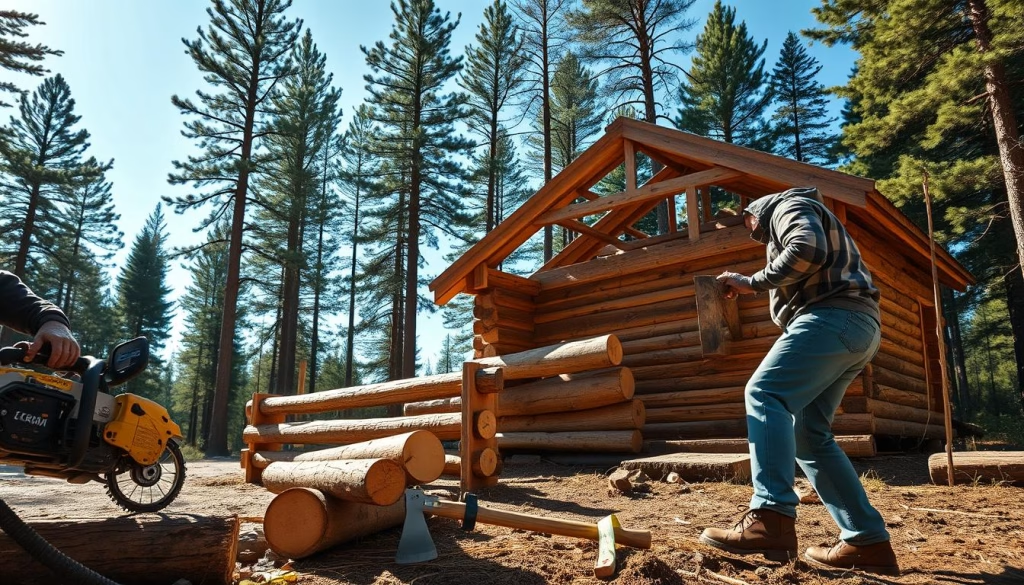
The choice of land is a pivotal element in realizing your vision. We encourage you to carefully assess your site. This assessment is essential for ensuring that your home will thrive in its environment.
Proper planning involves understanding your soil conditions. This knowledge can significantly impact the type of foundation required for your project. You should also define your design goals early on. This will help ensure that your layout accommodates your lifestyle and the specific environmental conditions of your property.
Accessibility is another critical factor. Your site selection should prioritize ease of log delivery and the long-term maintenance of your water and septic systems. For more insights on designing your dream home, check out our detailed plans at Tar River Log Homes.
Understanding the Foundation Process
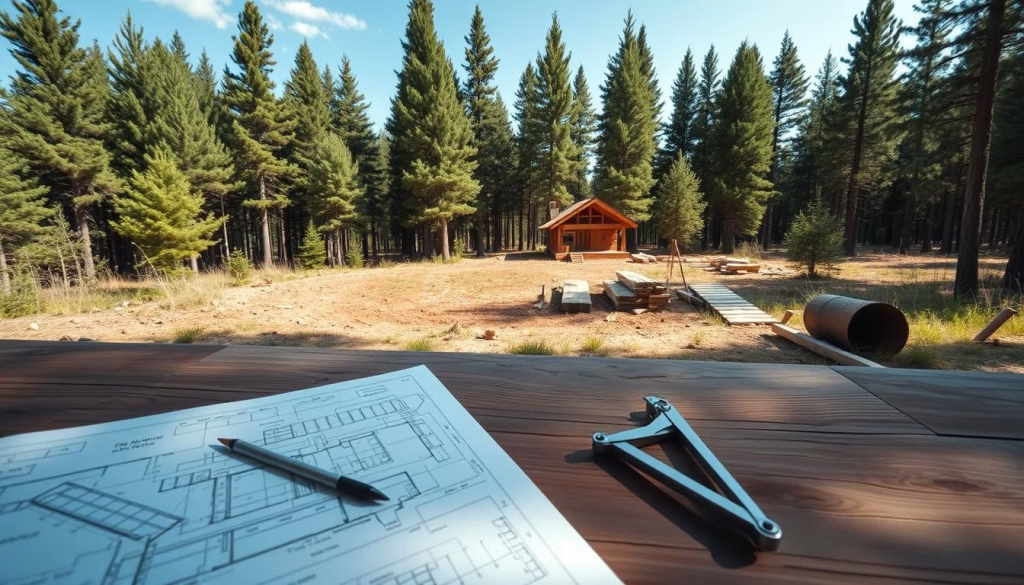
Understanding the foundation process is essential for ensuring your home stands strong. This step is vital in creating a stable base for your structure. A well-executed foundation supports your vision and the logs that will form your home.
Establishing batter boards is a time-honored technique, used as far back as ancient Egypt to ensure your foundation is perfectly level. IThis careful planning is crucial.
Your foundation must be robust enough to handle heavy snow loads. The process of digging and pouring requires precision, as the foundation must be square to ensure the walls rise evenly from the ground.
If the site presents complexities, such as pure clay soil, we suggest hiring professionals for the foundation work. Once the concrete is poured, you can begin the backfilling process, allowing you to finalize the site grade around your new structure.
| Foundation Steps | Description | Importance |
|---|---|---|
| Establish Batter Boards | Set up guides for leveling. | Ensures a stable foundation. |
| Digging | Excavate the site for the foundation. | Prepares the ground for pouring. |
| Pouring Concrete | Fill forms with concrete. | Creates a strong base for your home. |
Preparing and Sourcing Quality Materials
Gathering quality materials is a crucial step in your building journey. The right logs and lumber not only enhance the beauty of your home but also ensure its durability. We recommend sourcing high-quality materials from reputable suppliers like Tar River Log Homes in North Carolina, reachable at 1-252-544-5660 for your needs.
Choosing the right logs is critical, as they must be fully cured to prevent dry rot during the construction process.
To save on costs, consider using a portable sawmill to cut your own dimensional boards from the logs you purchase. We advise inspecting every log for quality, ensuring that the wood is free from excessive damage and suitable for structural use.
Working with local suppliers ensures you have access to the specific types of wood that thrive in your region’s climate and environment. This approach not only supports your project but also contributes to local economies.
Mastering Log Cabin Construction
Mastering the art of building your own home is a fulfilling endeavor that blends skill with creativity. We believe that this journey requires patience.
Our goal is to help you build log structures that are not only visually appealing but also structurally sound and capable of lasting for generations. Focus on the rhythm of your work, ensuring that each log is placed with precision to maintain the integrity of the walls.
We encourage you to learn from the successes and mistakes of those who came before you. This will refine your skills with every course of logs. Mastering this craft allows you to create a home that reflects your personal vision while adhering to the highest standards of quality.
Step-by-Step Wall Construction Techniques
Crafting sturdy walls is an essential step in the journey of creating your home. This phase not only supports the structure but also shapes the aesthetic of your dwelling. We recommend using the butt and pass method for your walls, as it provides a strong and reliable way to join logs at the corners.
Builders utilize 1/2 inch rebar to spike the logs, ensuring the walls remained secure against the forces of nature and earthquakes. To prevent splitting, you must pre-drill your logs carefully. An impact driver can be invaluable for this task.
The step-by-step process of wall construction requires you to alternate the butt ends of the logs. This ensures the walls rise evenly and maintain structural integrity. Additionally, we suggest placing a felt strip between the concrete pillars and the first course of logs to create a moisture barrier for your home.
Proper notching is also essential for log fitting. It prevents the walls from shifting and ensures a tight seal against the elements.
| Technique | Description | Benefits |
|---|---|---|
| Butt and Pass Method | Joining logs at corners for strength. | Provides stability and durability. |
| 1/2 Inch Rebar | Securing logs to the foundation. | Enhances resistance to natural forces. |
| Pre-drilling | Preparing logs for spikes. | Prevents wood splitting during installation. |
Innovative Lifting and Handling Systems
Innovative systems for lifting and handling materials can significantly ease your building process. Proper techniques not only enhance efficiency but also improve safety on-site. We encourage you to explore various tools that make lifting heavy materials manageable.
Here are some essential tools and techniques to consider:
- Using lifting poles and winches to gain mechanical advantage when raising heavy logs.
- Employing a 2-ton chain hoist for lifting large ridge poles.
- Utilizing hand tools like a draw-knife to peel logs, adding a personal touch to your materials.
- Prioritizing safety with straps and snatch blocks to control log movement during lifting.
- Incorporating a truck winch to pull logs into position after they are raised.
- Implementing innovative lifting systems to reduce physical strain on you and your team.
| Technique | Description | Benefits |
|---|---|---|
| Lifting Poles | Used to gain mechanical advantage. | Increases safety and efficiency. |
| Chain Hoist | For lifting heavy ridge poles. | Provides reliable support for large materials. |
| Hand Tools | Like draw-knives for log preparation. | Enhances craftsmanship and satisfaction. |
Roofing: Design, Materials, and Installation
Creating a solid roofing system is a fundamental step in your building journey. It not only protects your home but also enhances its overall aesthetic. We recommend starting with the installation of log rafters and a ridge pole.
To guarantee that your roof is well-protected, you must use a moisture barrier like tar paper before applying the final roofing materials. Additionally, using 3/4 inch plywood for the roof decking is essential for meeting local codes.
Here are some important roofing considerations:
- Ensure proper ventilation from the eaves to the peak to prevent moisture buildup.
- Overlapping shingles or metal panels is vital for maintaining a watertight seal.
- Design your roof to facilitate drainage and avoid pooling water.
| Roofing Element | Description | Benefits |
|---|---|---|
| Log Rafters | Support structure for the roof. | Provides strength and durability. |
| Ridge Pole | Top horizontal support for rafters. | Ensures stability of the roofing system. |
| Moisture Barrier | Protects against water infiltration. | Prevents damage and prolongs roof life. |
Interior Detailing and Finishing Touches
The finishing touches on your home are where your vision truly comes to life. This stage involves careful attention to detail, particularly in floor installation and window placement.
For flooring, we recommend flattening the inside of your bottom logs. This technique creates a level surface for your floor joists, ensuring stability while providing a solid base for the interior finishes.
When planning your window placement, think about maximizing natural light and cross-ventilation. Using brass casement adjusters for smaller openings can enhance functionality. Additionally, chinking the gaps between your logs is a crucial finishing touch. This step prevents drafts and keeps critters out of your living space.
To secure your interior flooring and wall structures, we suggest using lag bolts to fasten rim joists to the logs. Interior detailing, such as installing baseboards and trim, helps hide gaps between the floor and the logs, giving your home a polished look.
Incorporating Energy Efficiency and Insulation Techniques
Incorporating energy-efficient practices into your home design is essential for long-term comfort.
We also recommend considering sustainable insulation choices, such as closed cell foam. This option can significantly reduce the thickness required for your roof assembly while maintaining effectiveness.
A proper moisture barrier is crucial for your home. It protects both the insulation and the structural logs from damage caused by condensation. Additionally, running your plumbing lines deep enough is vital to avoid freezing, especially in colder climates.
To achieve optimal energy efficiency in a log home, sealing all gaps is key. Ensure that both the roof and floor are well-insulated against the elements. By integrating modern insulation techniques with the natural thermal mass of your log walls, you can create a comfortable living environment.
Leveraging Historic Techniques and Modern Innovations
Integrating time-tested methods with modern innovations creates a unique building experience. We encourage you to learn from historic techniques, such as those found in the 1905 American Homes and Gardens article, to build a better house.
Our guide shows you how to leverage the best of both worlds, ensuring your log cabins are both historically inspired and structurally modern. We believe that the way you approach your project defines the character of your home, blending the charm of the past with modern convenience.
By studying traditional log house construction, you gain a deeper respect for the craft and the ingenuity required to build a lasting home.
Conclusion
Completing your home project is not just an end, but the beginning of countless memories and experiences. We hope this guide has inspired you to start your own journey in building a home that reflects your personal vision.
Every great house begins with a solid foundation, careful planning, and the right tools. Whether you are constructing your walls, installing rafters, or finishing your floor, each step brings you closer to your dream.
Take your time, learn from the process, and enjoy the satisfaction of creating something that will last for years. By blending traditional methods with modern innovations, you can build log cabins that are beautiful, efficient, and uniquely yours.
Thank you for trusting our expertise in this rewarding journey. We look forward to seeing your vision come to life soon!


